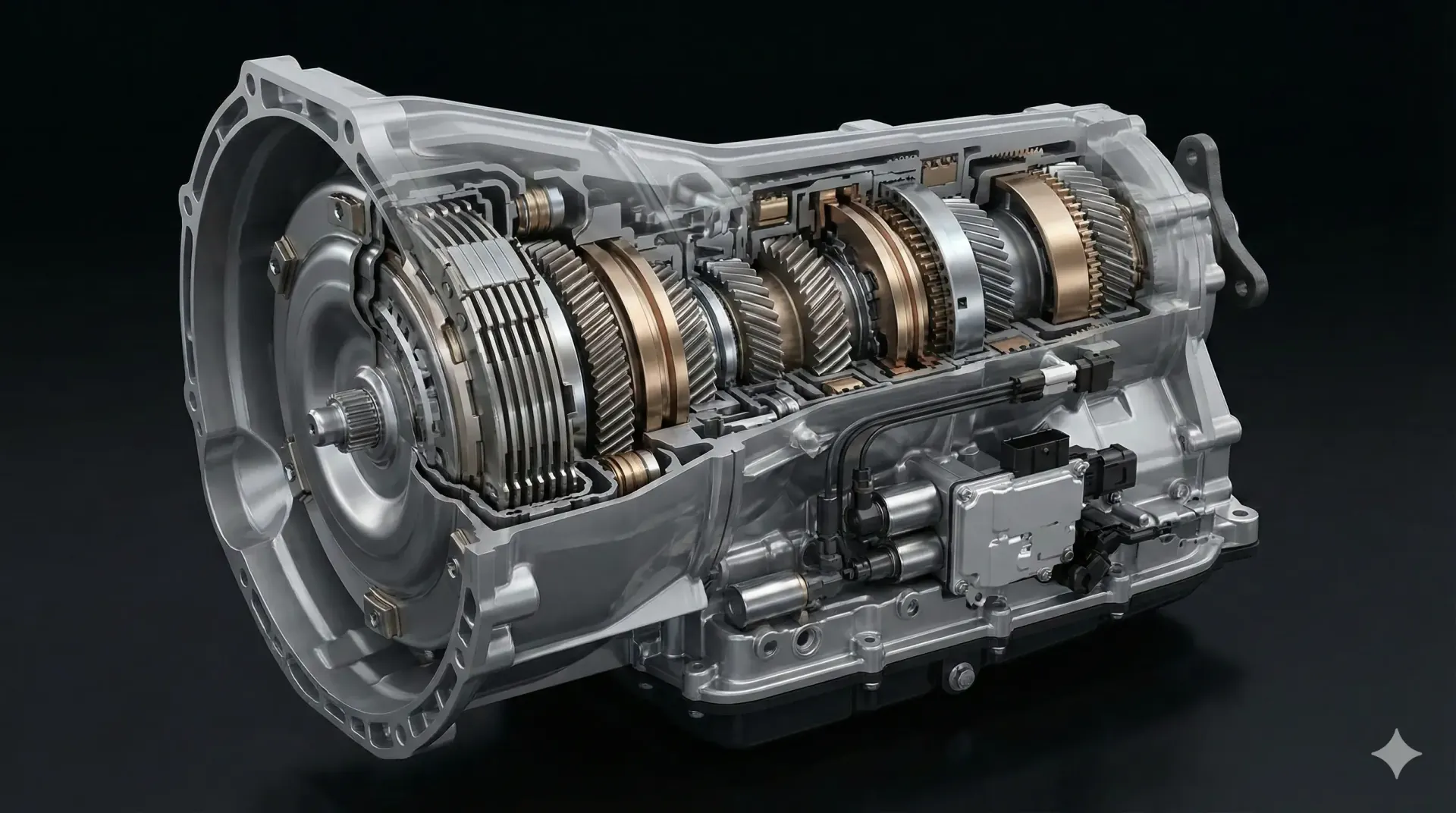
Professional TCM Flashing
& Adaptation
Just installed a transmission and the car won't move or shifts hard? It's not a mechanical failure, it's a lack of TCM Programming. We are specialists in software flashing and relearn protocols in Georgia.
The Bridge Between
Mechanics and Electronics
Installed a transmission? The job isn't done until the TCM "talks" to the engine. In modern transmissions, hardware is useless without the correct software. Many shops make the mistake of testing without adaptation, damaging new units in minutes.
Programming
- Software VIN
- Automatic shift points
- Torque converter logic
We adapt a "working" refurbished transmission to your car by programming its internal computer so it behaves as if it were the original.
Fast Learning
- Pressure adaptation
- Clutch point calibration
- Shift feel restoration
Immediately after installation, we force the TCM to run a "quick learn" so that the transmission operates like new.
Cloning (EEPROM)
- Exact software mirror
- No errors in ECU
- Verified CAN-bus sync
If possible, we extract the original TCM code and clone it to the new module. This avoids reprogramming the entire ECU/BCM network.
Writing the software is
half the job
The adaptive routines that follow decide whether the transmission lasts. We run the manufacturer relearn sequence in the order the platform requires, because each routine depends on the one before it.
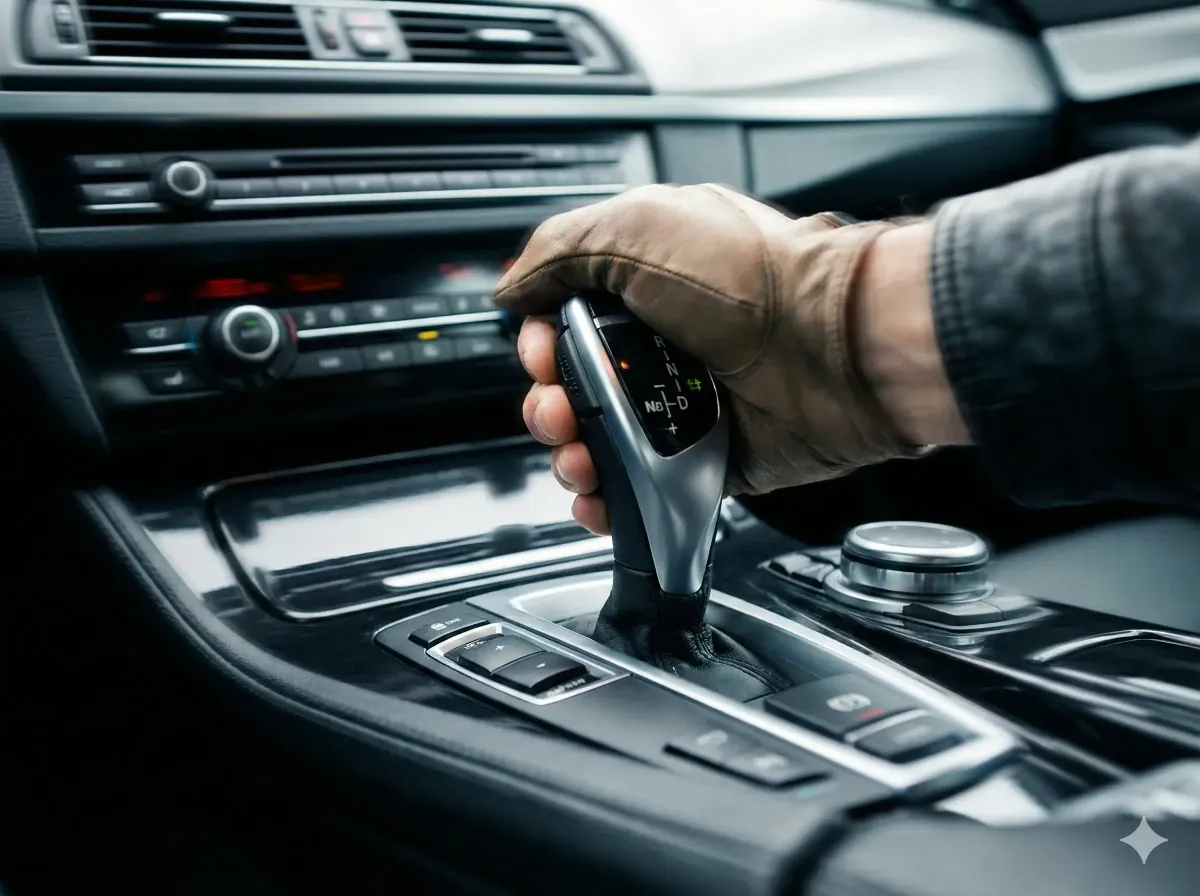
Solenoid Characterization
We program specific flow data for each solenoid into the TCM to ensure smooth and precise shifts.
Clutch Engagement Points
We calibrate clutch contact points to eliminate jerks and ensure perfect engagement.
Adaptive Values Reset
We erase the old transmission's wear history so the TCM learns the new unit's parameters.
Drive-Cycle Calibration
We guide you through or perform the necessary drive cycle so the software settles and adapts perfectly.
Brand & Model Specialists
Targeting the most common programming faults in Georgia
Ford / GM
Solenoid flashing and shift strategies.
Dodge / Ram
Proxi alignment and high-performance transmission adaptation.
Nissan / Toyota
Valve body calibration code writing.
European (DSG, ZF)
Virginizing and used module adaptation (EGS).
Your transmission not listed? Tell us what was fitted and whether the adaptives have been attempted, and we will say what the job involves.
Ford PowerShift DPS6 and 6DCT250
A used DPS6 transmission dropped into a Focus or Fiesta will shift badly until the adaptive routines are run — and reprogramming the TCM alone does not do it. Ford pairs TCM and PCM reprogramming with clutch adaptive learning, and requires a fully charged battery throughout.
Mobile TCM programming does not change any of that. We hold a Midtronics PSC-550S at 55 A or PSC-700S at 70 A on the vehicle for the whole procedure, and run the sequence in the order Ford specifies. That order is not optional — each routine depends on the one before it.
- 1
Transmission Range Sensor Adaptive Learning
The controller relearns where each gear position physically sits. Run first, because every later routine references it.
- 2
Range sensor verification
Confirm the learned positions read back correctly before moving on. Skipping this is how a shop ends up repeating the whole sequence.
- 3
Shift Drum Adaptive Learning
The shift drum positions are relearned against the new hardware, which a used transmission will not match out of the box.
- 4
Clutch Adaptive Learning
The most demanding phase, and the one that fails when something mechanical is wrong. It runs under specific vehicle conditions and cannot be forced.
- 5
Road-test adaptation
The drive cycle the manufacturer specifies, so the adaptives settle against real load rather than an idling engine.
When the clutch relearn keeps failing, stop paying for reflashes
If clutch adaptive learning will not complete, the answer is not another flash. It points at something physical: shift fork travel or position, the actuators, the clutch pack itself, the installation, wiring, supply voltage or ground — or the used transmission that went in.
We will tell you that rather than charge you for a second attempt at the same procedure. Programming does not fix worn clutches.
The same logic runs the other way. Before condemning a TCM we check power, grounds, and CAN High and CAN Low integrity — see the diagnostic protocol and the communication codes it covers. A module that stopped answering is often a wiring fault wearing a module's name.
Before you pay us: 14M02 and 19N08 on the Focus and Fiesta
Ford ran two warranty extension programmes on the DPS6 PowerShift in the Ford Focus and Fiesta — one on the transmission control module, one on the clutch. They cover different faults, and people confuse them constantly. Both are customer satisfaction programmes rather than safety recalls, which is exactly why they do not surface unless someone checks the VIN against them by name.
14M02
Transmission control module
The Ford TCM warranty extension: coverage on the DPS6 transmission control module to 10 years of service or 150,000 miles from the vehicle’s warranty start date, whichever came first. This is the one that matters if your fault is the control module rather than the mechanical side.
19N08
Transmission clutch
Extended the warranty on the DPS6 transmission clutch to 7 years of service or 100,000 miles. It addresses clutch judder or shudder on light acceleration from a stop, or during a shift — a different fault from a control module that has stopped responding.
How to check, and what to expect
- 1
Ask by programme number, and by the right one
A control module fault points at 14M02 and a shudder points at 19N08. Asking about the wrong number gets you told your vehicle is not affected when it may be affected under the other.
- 2
Use Ford’s own VIN lookup, not the NHTSA one
The NHTSA tool lists safety recalls only, and neither of these is a safety recall — both are customer satisfaction programmes. Enter the VIN on Ford’s own recall page, or have a Ford dealer check it in OASIS, or both will come back clean when they are not.
- 3
Eligibility is by VIN, never by model year
Two Focuses of the same model year can fall differently, because the programmes were scoped by build date and by what has already been done to that vehicle. A neighbour whose claim was refused tells you nothing about yours.
- 4
Expect to be outside the window, and check anyway
These are old programmes. A 2014 Ford Focus is long past the 7-year clock and close to the end of the 10-year one; the newest affected cars were built in 2015 and 2016, so almost every one is now outside, and the out-of-coverage goodwill routes Ford offered have closed too. The check still costs nothing, and it is the dealer’s call from your VIN rather than ours.
Where the vehicle is outside both programmes, or the programme has already been used, or the fault is not one they address — a used transmission that has been fitted, for instance — that is when the work comes to us. See what an on-site visit covers if the car is not driveable.
How long it takes, and what is covered
A TCM job is not finished when the flash is written. The adaptive routines run afterwards under conditions the platform sets, and a used transmission that will not complete a clutch relearn is a mechanical answer, not a programming one. The bands for adaptation work, and what the warranty excludes give the bands in hours, and what falls outside them.
What this costs
TCM flashing and adaptation
$250 – $450
Covers the flash, the adaptive learning routines the platform requires afterwards, and the road-test adaptation where the manufacturer specifies one.
Confirmed September 2026 · before travel
Auto Module Programming prices a TCM job on the adaptation, not the flash. Writing software is the quick part; the routines that follow run under conditions the vehicle sets and cannot be forced. And if a clutch relearn will not complete, the answer is not another flash — it points at something mechanical, and we will tell you that rather than bill you for a second attempt at the same procedure.
If a shop has already flashed the module once and the symptom is unchanged, say so — that history usually points at the answer and saves paying for the same procedure twice. Reach Auto Module Programming on (404) 812-8951
Don't Let Bad Software
Destroy Your New Transmission
Driving with an unprogrammed TCM isn't just annoying—it causes internal clutch slippage and premature failure within miles. You've invested in the hardware; don't risk it all on skipping the software.
- Protect your warranty validity
- Ensure factory-smooth electrical shifting
- Avoid "Gear Ratio Incorrect" codes
Ready to Drive?
We can be at your location in Metro Atlanta today. No towing needed.
Call Now: (404) 812-8951Local Service: Atlanta & Metro Area
We are a 100% Mobile Service based in Atlanta. We come directly to you—providing rapid response to shops and homes throughout the metropolitan area.
Core Atlanta
Buckhead, Brookhaven, Midtown, Sandy Springs, Dunwoody
North Metro
Alpharetta, Roswell, Johns Creek, Milton, Duluth
West & East Metro
Marietta, Smyrna, Vinings, Decatur, Lawrenceville
The Strategic Partner for
Mechanical Shops (B2B)
Own a transmission shop in Atlanta or nearby? We know you can't afford to send every car to the dealer on a tow truck. That kills your profit margin and delays your deliveries.
On-Site Service
We come to your shop, perform J2534 flashing and learning process while the car is on the lift.
Corporate Billing
Special plans and volume discounts for shops with constant flow in Georgia.
Diagnostic Support
We use OEM tools to determine if the problem is software or internal hardware failure.